
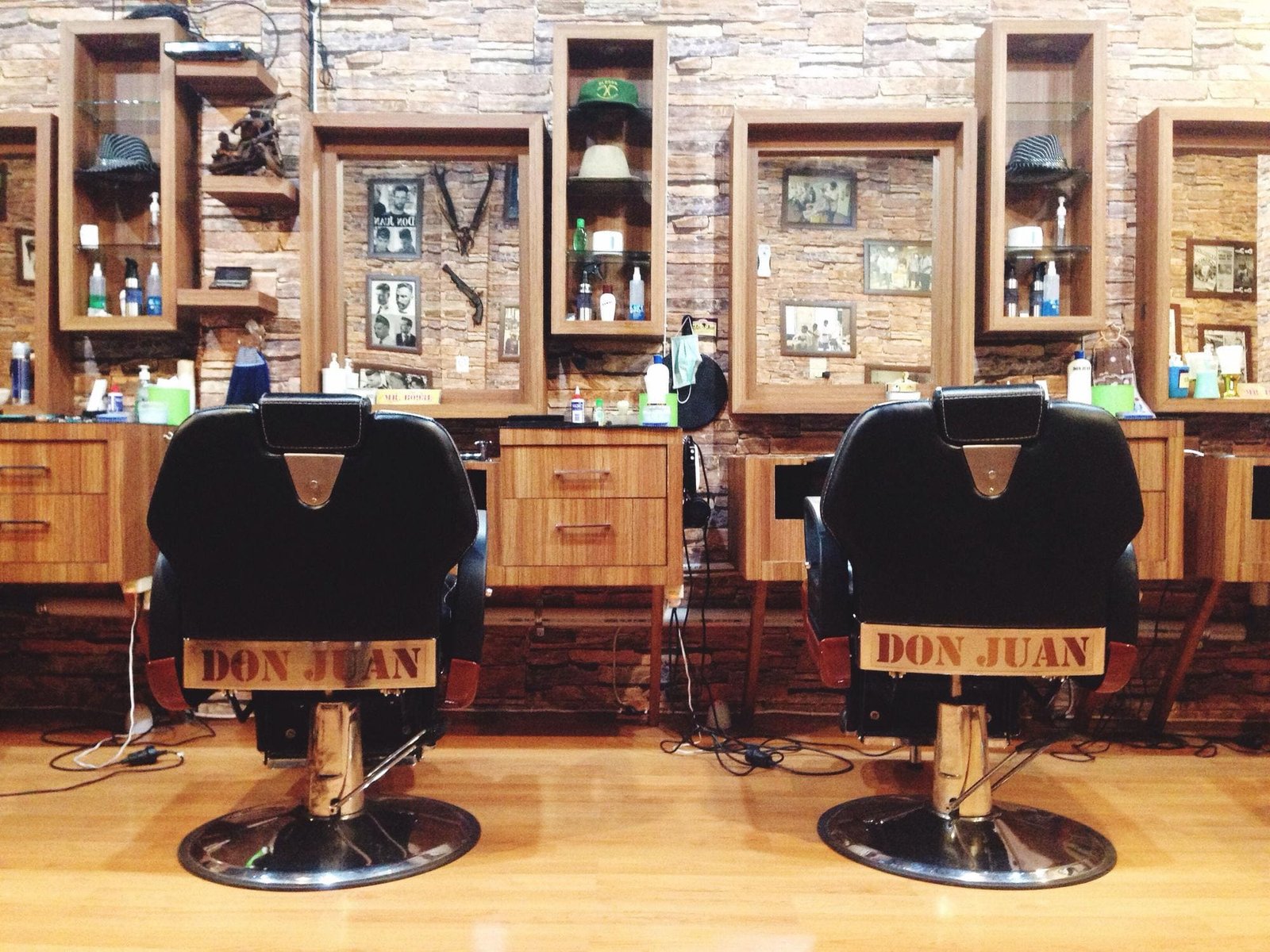
Short answer: barber tax deductions cover almost any expense that is ordinary and necessary to cut hair for money — booth rent, clippers and shears, blades, capes, towels, disinfectant, licensing, liability insurance, booking software, card processing fees, business mileage, continuing education, and the business share of your phone. If you are self-employed, those deductions land on Schedule C, where they cut both your income tax and your self-employment tax. That is why a missed write-off costs a barber more than it costs someone with a W-2.
Why barber tax deductions are worth more to you than to an employee
A booth renter or self-employed barber pays self-employment tax of 15.3% on net profit (12.4% Social Security plus 2.9% Medicare) on top of ordinary income tax. Stack that with a federal bracket and you can easily be losing 25 to 40 cents of every dollar of profit you failed to offset with a legitimate expense. Put differently: a $600 clipper order you never recorded is not a $600 mistake, it is a couple hundred dollars of real tax you did not have to pay.
This is also why sloppy books are expensive rather than merely untidy. The IRS does not hand out deductions. You claim them, and you support them with records.
Is booth rent tax deductible?
Yes. Booth rent is fully deductible as a business expense and is usually the single largest line on a booth renter’s Schedule C. It belongs under rent or lease of other business property.
Two things protect this deduction: a written booth rental agreement, and a traceable payment trail. If you hand your shop owner cash every week, ask for a signed receipt or switch to a transfer from your business account. Cash rent with no paper is the deduction most likely to be challenged.
Which tools and equipment can a barber write off?
Anything you use to perform the service. Common deductible tools include:
- Clippers, trimmers, foil shavers, and cordless charging stands
- Shears, razors, replacement blades, and blade guards
- Clipper oil, blade wash, sprays, and cleaning brushes
- UV sanitizer cabinets, autoclaves, and Barbicide jars
- Barber chairs, station mirrors, backbars, and rolling trays
- Hot towel cabinets, steamers, dryers, and floor mats
- Your own workstation setup if you rent an empty booth
Small tools are normally deducted in full in the year you buy them. Bigger purchases like a chair or a full station are technically depreciable assets, though Section 179 expensing and the de minimis safe harbor usually let you write off the whole cost in year one. If you are buying a station, ask before you file rather than after.
What supplies and product costs count?
- Capes, neck strips, towels, and gloves
- Disinfectant, Barbicide, sanitizer, and cleaning supplies
- Shampoo, conditioner, tonics, and styling product used on clients
- Aftershave, powders, and blade-safe consumables
- Laundry and linen service, or the cost of laundering shop towels
One distinction that trips barbers up: product you use on clients is a supply expense, but product you buy to resell on your retail shelf is inventory. Retail sales flow through cost of goods sold, and you deduct the cost when it sells rather than when you buy it. If you sell pomade and beard oil, your books need to separate the two.
Can barbers deduct barber school or continuing education?
Education that maintains or improves the skills of the business you are already in is deductible. Education that qualifies you for a new trade is not. In practice, that means your initial barber school tuition generally is not deductible as a business expense, but almost everything after you are licensed is:
- Continuing education required for license renewal
- Cutting, fading, and coloring classes and workshops
- Barber expos, hair shows, and trade conferences
- Business, bookkeeping, or marketing courses for your shop
- Books, online course subscriptions, and educational memberships
Travel to attend a legitimate educational event is deductible too, including airfare, lodging, and half of your meals. A weekend in Atlanta built around one hour of class is not.
What about mileage and vehicle costs?
Driving from your house to the shop you work at every day is commuting, and commuting is never deductible. What does count:
- Driving between two shops you work at in the same day
- Runs to the beauty supply house or hardware store for the business
- Travel to a client’s home, a wedding, a photo shoot, or a barber event
- Trips to the bank, the post office, or your accountant for business reasons
You can use the IRS standard mileage rate, or deduct actual vehicle expenses by business-use percentage. The business rate changed mid-year in 2026: 72.5 cents per mile for January 1 through June 30, then 76 cents per mile from July 1 through December 31, so a full year of driving has to be split between the two periods. Most barbers come out ahead on the standard rate and it is far easier to defend. Either way you need a log with the date, the destination, the business purpose, and the miles. A phone app that tracks trips automatically is worth the few dollars a month.
Software, apps, and card processing fees
- Booking platforms such as Booksy, Square Appointments, or theCut
- Payment processing fees on card, tap, and app payments
- Accounting software and receipt-capture tools
- Website hosting, domain renewal, and your online booking page
- Design tools, scheduling text services, and email marketing
- The business-use share of your cell phone bill
Processing fees deserve their own mention because they are quietly one of the most commonly missed deductions in the trade. If a client pays $45 and the processor takes $1.30, your income is $45 and your fee expense is $1.30. Barbers who record only the net deposit understate income and lose the fee deduction at the same time — worse on both ends.
Can a barber deduct a home office?
Sometimes, and more often than barbers assume. You need a space used regularly and exclusively for business, and you need it to be your principal place of business for the administrative side of the work. A booth renter who does all scheduling, invoicing, ordering, and bookkeeping at a desk at home — because the shop gives them nowhere to do it — frequently qualifies even though the haircuts happen elsewhere.
The simplified method is $5 per square foot up to 300 square feet, capping the deduction at $1,500 with almost no recordkeeping. The regular method allocates actual rent, utilities, and insurance by square footage and often produces a bigger number. The word doing the work in that rule is exclusively: a corner of the kitchen table does not count.
What barbers cannot deduct
- Your own haircuts, grooming, or gym membership
- Everyday clothes, even the all-black fit you only wear to work — unless it is branded or genuinely unsuitable for street wear
- Commuting from home to your regular shop
- Personal transfers that happen to run through the same Cash App you take payments in
- A phone bill you use 80% personally, deducted at 100%
- Traffic tickets, late-filing penalties, and interest on personal debt
- The revenue you gave up on a free cut — you deduct the supplies you used, not the sale you did not make
Barber tax deductions almost nobody claims
The write-offs that show up on the second page of the return are the ones self-prepared barbers miss most:
- The qualified business income deduction — up to 20% of your net self-employed profit, claimed on the 1040 rather than Schedule C. It only works if your Schedule C is prepared correctly.
- One half of your self-employment tax, deductible against income tax.
- Self-employed health insurance premiums, if you are not eligible for coverage through a spouse’s employer.
- Retirement contributions to a SEP-IRA or Solo 401(k), which can shelter a meaningful share of a good year’s profit.
- Business liability insurance and licensing, including your state board fees and any city business license.
- Professional fees — bookkeeping, tax preparation, and legal advice for the business.
Is there really no tax on tips?
There is a real tip deduction, and barbers are specifically covered — but it is narrower than the slogan suggests. The Treasury list of occupations that customarily and regularly received tips on or before December 31, 2024 includes barbers, hairdressers, hairstylists, and cosmetologists, so tips earned at the chair can qualify. The limits matter:
- It is effective for tax years 2025 through 2028.
- The maximum annual deduction is $25,000.
- If you are self-employed, the deduction cannot exceed your net income, before this deduction, from the trade or business where the tips were earned.
- It phases out once modified adjusted gross income passes $150,000, or $300,000 for joint filers.
- If you are married you must file a joint return, and you need a valid Social Security number.
- You can claim it whether you itemize or take the standard deduction.
- It is claimed on Schedule 1-A with Form 1040, and only reported tips count.
- It is not available to someone self-employed in a specified service trade or business under Section 199A, or to employees of one.
Two things worth sitting with. Only tips you actually reported qualify, so the barbers who have been leaving cash tips off the books are precisely the ones who cannot use this. And because it is claimed on Schedule 1-A rather than on your Schedule C, it reduces income tax rather than your business profit — ask your CPA how it lands against your self-employment tax before you plan around it.
What records make a deduction survive an audit?
A deduction you cannot document is a deduction you can lose. The standard the IRS applies is unforgiving in its simplicity: prove the amount, the date, and the business purpose.
- Open a separate business bank account and a business card, and stop mixing.
- Capture the receipt at the moment of purchase and attach it to the transaction.
- Categorize and reconcile monthly, not every April.
- Keep a contemporaneous mileage log — reconstructing one later rarely holds up.
- Keep your booth agreement, 1099s, and merchant statements together with the year’s file.
- Retain records at least three years. Keep six years of records if you failed to report income you should have and it came to more than 25% of the gross income shown on that return, and keep them indefinitely for any year you never filed.
Barbershops are classified as cash-intensive businesses, which means the IRS applies extra scrutiny as a matter of routine. If you want the longer version of that, see our guide on preparing a barber business for an IRS audit and our piece on why monthly bookkeeping matters.
A monthly routine that captures everything
- Every payment in, from every source, recorded gross — cash, card, Cash App, Zelle, Booksy, Venmo.
- Every business purchase on the business card, receipt photographed the same day.
- Mileage tracked automatically by app.
- A monthly reconciliation against the bank and merchant statements.
- A profit and loss statement you actually read before the month closes.
Do that and your deductions stop being a memory exercise in March. They are already sitting in the books, categorized and supported.
Want someone to find these for you?
BarberBalances is a CPA-led bookkeeping firm that works only with barbers — booth renters, commission barbers, and shop owners — in all 50 states. We categorize every deduction, keep the documentation attached, and a CPA signs the return. Book a free 20-minute call or see plans and pricing.
Reviewed by Fatima Traore S., CPA — licensed in Maryland, Advanced QuickBooks Online ProAdvisor, with 15+ years in accounting, compliance, and auditing, and a specialty in IRS cash-intensive business rules.
This article is general educational information for barbers and barbershop owners, not individualized tax advice. Dollar limits, mileage rates, and thresholds change from year to year. Talk to a CPA about your own situation before you file.